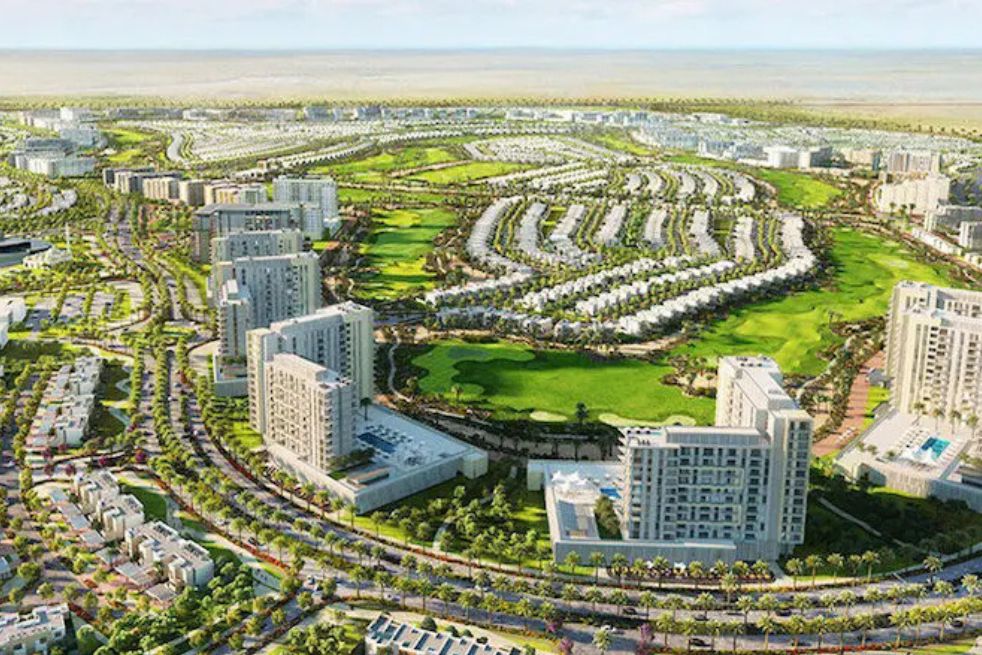
Thinking of investing in Dubai's booming off-plan property market in 2025? You're not alone. With record-breaking sales, a surge in global interest, and the city's ambitious 2040 Urban Master Plan shaping its future, the opportunities for savvy investors are immense. But in a market moving this fast, how do you navigate the landscape, understand the risks, and choose an investment poised for growth?
This comprehensive guide is designed to be your go-to resource. We'll break down the latest market performance, weigh the pros and cons of buying off-plan, and pinpoint the best investment locations across the city. We will also demystify the legal protections that make Dubai a secure investment hub, explore how the Golden Visa is fueling demand, and compare the top developers to help you make an informed decision.
Why is Dubai's Property Market Booming? A 2025 Mid-Year Snapshot
The first half of 2025 has confirmed Dubai's status as a top-tier global real estate destination. The market isn't just growing; it's breaking records, driven by strong economic fundamentals, strategic government initiatives, and powerful investor confidence.
Unprecedented Growth in H1 2025
The year kicked off with incredible force. The first quarter (Q1) saw over 42,000 residential sales, a 23% jump from the previous year, with the total value hitting AED 114 billion. This momentum was overwhelmingly led by the off-plan sector, which made up 59% of all deals.
The trend accelerated into the second quarter (Q2), which posted the highest sales volume and value ever for that period. Q2 saw nearly 50,000 residential sales worth AED 147.6 billion (approx. $40.2 billion), a 22% increase in volume from Q2 2024.
This intense activity has driven steady price appreciation. After a 20% price increase in 2024, forecasts for 2025 predict more stable growth between 5% and 10%. In Q1 2025, the average price for an off-plan apartment climbed to AED 1,926 per square foot, a 28.6% increase from Q3 2024.
| Metric | Q1 2025 Value | Q2 2025 Value | Year-on-Year Growth (H1) |
|---|---|---|---|
| Total Transaction Volume | 42,422 | 49,606 | ~22.7% |
| Total Sales Value (AED) | 114 Billion | 147.6 Billion | ~29% (Q1 YoY) |
| Average Sale Price (AED) | 2.7 Million | 2.97 Million | Increasing |
| Off-Plan Transaction Volume | 24,942 (59% of total) | N/A | 19.9% (H1 YoY) |
| Secondary Market Volume | 17,480 (41% of total) | N/A | 26.8% (H1 YoY) |
| Villa Transaction Growth | 65% (Q1 YoY) | N/A | 27.6% (H1 YoY) |
| Apartment Transaction Growth | 14% (Q1 YoY) | N/A | 18.2% (H1 YoY) |
Off-Plan vs. Secondary Market: A Clear Divide
While the overall market is thriving, a closer look reveals distinct trends. The off-plan market is the main engine, fueled by attractive developer payment plans and investors seeking capital appreciation. Villas and townhouses are in particularly high demand, with transaction volumes surging 65% and 57.4% respectively, pointing to a strong preference for family-sized homes.
However, a fascinating trend has appeared in the luxury segment. While the broader off-plan market booms, sales of prime off-plan properties (the most luxurious) actually dropped by 30% in Q1. In contrast, sales of ready-to-occupy luxury properties soared by 77%. This suggests that while investors in the mid-market are comfortable with off-plan purchases, high-net-worth buyers are prioritizing tangible, completed assets, possibly to avoid construction risks on multi-million dollar investments.
The Foundation for Growth: Dubai's Vision
This market strength is built on a solid foundation. Dubai's GDP is forecast to grow over 5% in 2025, and the population grew by 5% in 2024, driven by an influx of global talent.
This growth is guided by the Dubai 2040 Urban Master Plan, a government roadmap for sustainable development designed to accommodate a future population of 5.8 million. This long-term planning, combined with investor-friendly policies like the Golden Visa, 100% foreign business ownership, and a zero-tax environment on property, creates a uniquely stable and attractive investment climate.
Off-Plan vs. Ready Property: Pros and Cons for Investors
Off-plan property—real estate sold by a developer before construction is finished—is a pillar of Dubai's market. It offers a unique balance of high-reward potential and specific risks that every investor must understand.
The Pros: Why Buy Off-Plan?
- Lower Prices & Capital Growth: The biggest draw is the price. Off-plan units are often sold at a significant discount compared to completed properties, offering a lower entry point and the potential for substantial capital appreciation as the project is built and the surrounding area matures.
- Flexible Payment Plans: Developers offer attractive payment plans that are often tied to construction milestones or spread out over time. This allows investors to secure an asset with a smaller initial investment and manage cash flow more effectively than the large down payments required in the secondary market.
- Higher Rental Yields: Brand new properties with modern amenities in emerging communities are highly attractive to tenants, often leading to higher rental yields. Gross rental yields in Dubai can range from 7% to 11%, which is globally competitive.
- Brand New Asset: You are the first owner of a pristine property built to the latest standards, with no wear and tear. Early buyers may even get to customize finishes.
The Cons: What Are the Risks?
- Project Delays or Cancellation: Construction delays are a primary risk and can impact your expected returns by tying up capital and pushing back rental income.
- Market Fluctuations: The market could cool down between your purchase and the project's completion. A downturn could mean the property's value at handover is less than what you paid.
- Quality Differences: The finished product might not perfectly match the glossy marketing brochures. The quality of finishes or minor layout details can sometimes differ from the initial renderings.
- Developer Default: Though rare due to strict regulations, a developer could face financial failure. This underscores the critical importance of choosing a reputable and financially sound developer.
- Resale Restrictions: If you're looking for a quick flip, be aware that developers often require you to pay a certain percentage of the property's value (from 10% to 50%) before allowing you to resell it.
Key Insight: The off-plan market offers significant advantages but requires careful due diligence. Investors should balance the potential for higher returns against the inherent risks of pre-construction investments.
Where to Invest: Top Off-Plan Areas in Dubai for 2025
A successful strategy requires a granular look at specific areas. Dubai's off-plan opportunities can be broken down into three main categories: luxury, mid-tier, and affordable high-growth.
Best Luxury Off-Plan Investments
This segment is for investors seeking premium, lifestyle-focused assets in exclusive communities. The goal is long-term capital preservation and appeal to high-net-worth individuals.
- Key Areas: Dubai Hills Estate, Mohammed Bin Rashid (MBR) City, Palm Jebel Ali, Dubai Harbour, Al Wasi.
- Why Invest: These are "trophy assets." Dubai Hills Estate is a top search for villas, known for its green, family-friendly environment. MBR City is prized for its central location and sustainable design. Mega-projects like Palm Jebel Ali and Dubai Harbour are the next generation of iconic waterfront destinations.
Top Mid-Tier Areas for High Rental Yields
This is the core of the investment market, offering a balance of affordability, strong rental income, and steady capital growth. These areas are popular with Dubai's large professional and family population, ensuring a deep tenant pool.
- Key Areas: Jumeirah Village Circle (JVC), Jumeirah Village Triangle (JVT), Al Jaddaf, The Valley, DAMAC Lagoons, Madinat Jumeirah Living.
- Why Invest: The focus here is on generating reliable rental income. JVC is consistently a top performer for off-plan sales due to its competitive pricing and proven rental yields. Master-planned communities like The Valley by Emaar and DAMAC Lagoons are gaining huge traction by offering unique, themed lifestyles that attract families and younger buyers.
Affordable Areas with High Growth Potential
These areas offer the lowest entry prices and the highest potential for long-term capital appreciation, driven by future infrastructure and economic development.
- Key Areas: Dubai South, Dubai Investments Park (DIP), Dubailand, Majan.
- Why Invest: This is a strategic bet on Dubai's future. The investment case for Dubai South is tied to the massive expansion of Al Maktoum International Airport and its proximity to Expo City, positioning it as a future economic hub. Dubailand remains a top choice for affordable villas, serving Dubai's growing middle-income population.
| Investment Zone | Segment | Key Developers | Avg. Entry Price (1-BR Apt) | Projected Gross Rental Yield (%) | Investment Thesis |
|---|---|---|---|---|---|
| Dubai South | Affordable | Emaar, Azizi, Sky View | AED 525,000 - 850,000 | High (Future) | Long-term growth linked to airport expansion and Expo City |
| JVC | Mid-Tier | Binghatti, Azizi, Object One | AED 624,000 - 850,000 | 7% - 9% | Balanced yield and capital growth; high transaction volume |
| Dubai Hills Estate | Luxury | Emaar, City View | AED 1.45M - 1.8M | 5% - 6.5% | Lifestyle asset; strong capital preservation; family-oriented |
| DAMAC Lagoons | Mid-Tier | DAMAC Properties | N/A (Villas/Townhouses) | 6% - 8% | Unique leisure-led concept; high appeal to younger buyers |
| Dubai Harbour | Luxury | Emaar, Arada | AED 2.7M - 4.14M | 5.5% - 7% | Prime waterfront lifestyle; marina-centric; high-end tourism |
| Al Jaddaf | Mid-Tier | Binghatti, MAG Group | AED 600,000 - 888,000 | 6% - 7.5% | Historic district transforming into urban hub; freehold status |
Is Buying Off-Plan in Dubai Safe? Understanding the Legal Protections
One of Dubai's biggest advantages is its mature and robust legal framework designed to protect investors. Understanding these safeguards is key to investing with confidence.
RERA and the DLD: The Market Regulators
The Real Estate Regulatory Agency (RERA) and the Dubai Land Department (DLD) are the government bodies that oversee the entire market. They enforce strict rules on developers and brokers. Before investing, your first step should always be to verify that the developer and the project are registered with the DLD.
The Escrow Account Law: Your Money is Protected
This is the cornerstone of investor protection. Law No. 8 of 2007 mandates that developers must open a separate, RERA-approved escrow account for every project. All payments you make go directly into this account, which is held by an independent trustee bank. The developer can only withdraw funds to pay for construction costs after reaching verified project milestones. This prevents your money from being misused. To ensure developers are committed, they must also deposit at least 20% of the project's construction cost into the escrow account upfront.
The Sales and Purchase Agreement (SPA): Your Legal Contract
The SPA is the legally binding contract between you and the developer. It details all the terms of the sale, including property specifications, the total price, the payment schedule, and the Anticipated Completion Date (ACD). To be legally valid, all off-plan SPAs must be registered with the DLD's "Oqood" system, which creates an official government record of your ownership rights.
Your Rights if Things Go Wrong
Dubai law provides a clear framework for what happens if either party defaults. If a buyer defaults on payments, the developer's recourse is tied to the project's construction progress. For example, if a project is less than 60% complete, the developer can terminate the agreement but can only retain 25% of the property's value. Conversely, if a developer causes excessive delays, the buyer can file a complaint with the DLD or take legal action to seek compensation or cancel the contract.
Investor Tip: Always verify a project's RERA registration and escrow account details before committing any funds. This is your first line of defense against potential risks.
The Golden Visa Effect: How New Rules Are Driving Demand
A powerful catalyst reshaping demand is the UAE's Golden Visa program. This initiative offers long-term residency (5 or 10 years) to those who invest AED 2 million or more in property, providing stability for investors and their families.
A game-changing update in January 2024 supercharged its impact. The government removed the previous requirement for a minimum down payment (which was AED 1 million) to qualify. Now, as long as the property's total value is at least AED 2 million, you are eligible, regardless of whether it's off-plan, mortgaged, or paid in installments.
This has made the Golden Visa dramatically more accessible, especially for off-plan buyers who can now qualify by using flexible developer payment plans. In response, developers are actively designing projects that align with the AED 2 million threshold. This policy is attracting not just investors but also professionals and families looking to make Dubai their long-term home, creating a sustainable, organic demand for housing that supports the market's long-term health.
Choosing a Developer: Emaar vs. DAMAC vs. Sobha and More
Your choice of developer is as important as the property itself. They are your partner in this long-term investment. Here's a look at some of the key players in Dubai.
Emaar Properties: The Blue-Chip Standard
- Reputation: The UAE's largest developer, behind icons like the Burj Khalifa and The Dubai Mall. Emaar is synonymous with high-quality, large-scale master-planned communities like Downtown Dubai and Dubai Hills Estate.
- Strengths: Unmatched reputation for quality, on-time delivery, and creating communities that hold their value. Emaar is considered the benchmark for stability and long-term growth. Their financial strength was recently reaffirmed with credit rating upgrades from S&P and Moody's.
- Considerations: Emaar properties command a price premium.
Sobha Realty: The Quality Specialist
- Reputation: Known for an obsessive focus on quality through a "backward vertical integration" model, controlling every step of the construction process. Its flagship community is Sobha Hartland.
- Strengths: Delivers a superior and consistent build quality, often ahead of schedule. The company has seen massive sales growth, capturing about 10% of Dubai's market share in 2024.
- Considerations: Customer service reviews are mixed, with some complaints about post-handover support. Historically, capital appreciation has been more moderate compared to Emaar.
DAMAC Properties: The Luxury Marketer
- Reputation: Known for high-profile marketing, rapid project launches, and luxury branded residences (e.g., Cavalli, de Grisogono). Key projects include DAMAC Hills and the themed DAMAC Lagoons community.
- Strengths: As Dubai's second-largest developer, DAMAC has a strong market position and a positive financial outlook from S&P. It boasts a very high overall customer satisfaction rating on Trustpilot.
- Considerations: Some customers have reported issues with post-handover property management and service charges.
Meraas Holding: The Lifestyle Creator
- Reputation: Focuses on creating sophisticated, design-led urban destinations like City Walk, Bluewaters Island, and La Mer, where the overall experience is paramount.
- Strengths: Excels at creating unique, high-demand environments that foster a strong sense of community and command premium values.
- Considerations: Projects have a distinct contemporary style that may not appeal to everyone. Some residents have noted high service charges and traffic congestion in popular areas.
Nakheel Properties: The Iconic Master Developer
- Reputation: A government-owned developer famous for city-shaping projects that have redefined Dubai's coastline, most notably The Palm Jumeirah.
- Strengths: Delivers iconic projects on a massive scale with strong government financial backing.
- Considerations: As a state-linked entity, its strategic focus can be influenced by broader government objectives.
| Developer | Key Strengths | Key Considerations | Primary Market Niche | Investor Profile Match |
|---|---|---|---|---|
| Emaar Properties | Benchmark for quality, on-time delivery, financial stability (BBB+ rating), strong capital appreciation. | Premium pricing. | Large-scale, integrated master-planned communities. | Risk-Averse, Long-Term Capital Growth. |
| Sobha Realty | Superior in-house construction quality, ahead-of-schedule delivery, strong sales growth. | Mixed customer service reviews, historically moderate capital appreciation. | High-quality, vertically integrated luxury developments. | Quality-Focused, End-User, Stable Yield. |
| DAMAC Properties | High-velocity project launches, strong marketing, leadership in branded residences, positive financial outlook. | Reports of post-handover service and maintenance issues in some projects. | Branded luxury and large-scale themed communities. | High-Growth, Yield-Focused, Brand-Conscious. |
| Meraas Holding | Creation of unique, high-demand lifestyle destinations, innovative design, strong brand value. | Niche contemporary aesthetic, reports of high service charges and some project delays. | Curated urban and waterfront lifestyle districts. | Lifestyle-Driven, Capital Appreciation, Design-Focused. |
| Nakheel Properties | Delivers iconic, city-shaping waterfront projects, strong government backing. | Project pipeline influenced by government strategic objectives. | Transformative, large-scale coastal and infrastructure projects. | Long-Term Strategic, Unique Asset Acquisition. |
The Future of Dubai Real Estate: What to Expect Beyond 2025
The long-term outlook for Dubai's property market is one of managed, sustainable growth, guided by a clear government vision to create a stable and resilient environment.
Supply, Demand, and Price Stability
A significant pipeline of new properties is set to be delivered, with over 300,000 new units expected by 2028 and around 182,000 across 2025 and 2026. This managed increase in supply is expected to moderate the rapid price hikes of recent years, leading to more stable and organic growth rather than a speculative bubble.
The Dubai 2040 Urban Master Plan
This is the most critical document for understanding Dubai's future. It's a blueprint for sustainable urbanism that aims to enhance quality of life, double green spaces, and create a "20-minute city" where residents can access daily needs easily. For investors, this means the government is actively engineering a "soft landing" for the market by aligning new developments with genuine, population-driven demand. This reduces long-term volatility and makes the market more predictable.
Key Strategic Recommendations
- Think Long-Term: The market favors a long-term holding strategy. Focus on generating returns through a combination of rental income and steady capital appreciation.
- Focus on Master-Planned Communities: The most resilient value is in large, integrated communities where the developer is invested in creating a complete lifestyle ecosystem.
- Diversify Your Portfolio: Consider a mix of assets, such as a high-yield apartment in JVC combined with a long-term growth townhouse in an emerging community like The Valley.
- Developer Due Diligence is Non-Negotiable: Scrutinize a developer's track record for delivery, quality, and customer service beyond the marketing hype.
Frequently Asked Questions (FAQ) about Dubai Off-Plan Investing
Q1: Is it safe for foreigners to buy off-plan property in Dubai?
Absolutely. Dubai has a highly regulated market designed to protect foreign investors. Key protections include mandatory RERA registration for all projects, legally binding Sales and Purchase Agreements (SPAs), and the Escrow Account Law, which ensures your funds are used only for the construction of your specific project.
Q2: What is the minimum investment for a Golden Visa with an off-plan property?
To be eligible for the 10-year Golden Visa, you must invest in a property with a total value of at least AED 2 million (approximately $545,000). Following a key rule change in 2024, there is no longer a minimum down payment required, meaning you can qualify by using the developer's installment plan for an off-plan property.
Q3: Can I sell my off-plan property before completion?
Yes, it is possible to sell, a practice often called a "flip." However, most developers have restrictions. They typically require you to have paid a certain percentage of the property's value—often between 10% and 50%—before they will grant a No Objection Certificate (NOC) for the sale.
Q4: Which areas are best for high rental yields in 2025?
Mid-tier communities known for their affordability and strong tenant demand consistently offer the best rental yields. Areas like Jumeirah Village Circle (JVC), Al Jaddaf, and emerging family-oriented communities are excellent options, with gross rental yields often ranging from 7% to 9%.
Q5: What happens if my off-plan project is delayed?
Your Sales and Purchase Agreement (SPA) will specify an Anticipated Completion Date (ACD) and usually includes a grace period (typically 6-12 months). If the developer exceeds this timeframe, you have legal recourse. You can file a complaint with the DLD, which can mediate a solution, or you can pursue legal action to claim financial compensation for the delay or even request to terminate the contract and receive a refund.
Final Thought: Dubai's off-plan property market offers compelling opportunities in 2025, supported by strong fundamentals, transparent regulations, and visionary urban planning. By focusing on location, developer reputation, and long-term value creation, investors can navigate this dynamic market with confidence.